
In Memoriam: Professor James Wiseman
Clare Hall is saddened to learn of the death of Professor James Wiseman, Life Member and former Visiting Fellow of the College, who passed away on 12 August 2026, shortly before his 92nd birthday.
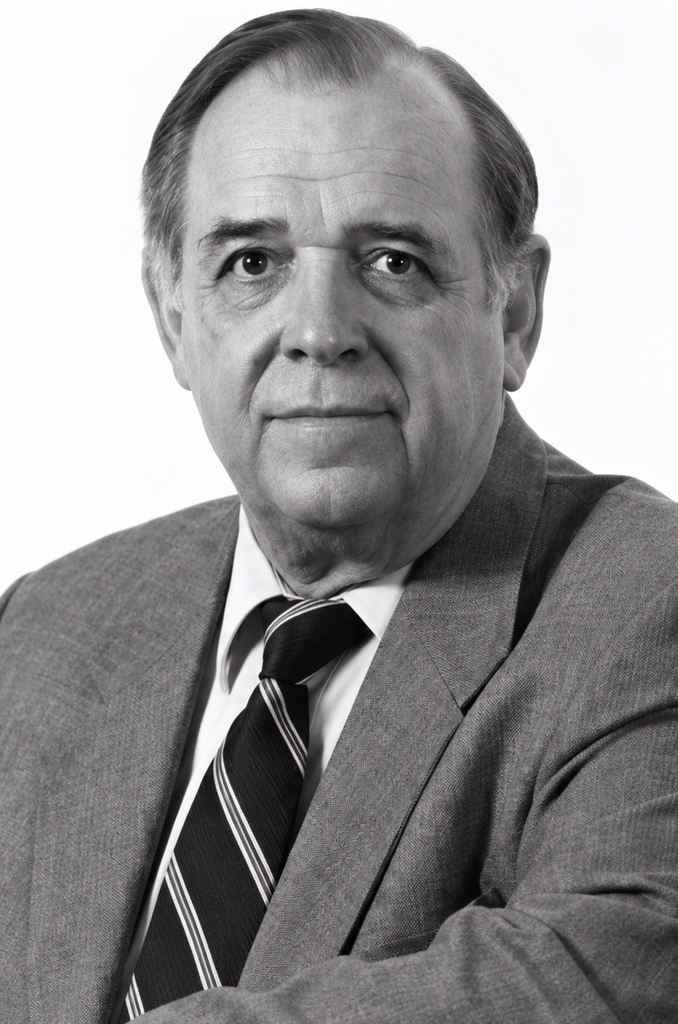
He was noted as the founder in 1981 of the Department of Archaeology at Boston University, Massachusetts, the first freestanding Archaeology department in a country where the discipline is most often subsumed into Anthropology or Classics as the past tense of anthropology or a complement to the literature and history of the Greco-Roman world. Wiseman saw archaeology as an intellectual, practical, and academic discipline in its own right, with its own body of evidence and its own rules of proof, and its own historical trajectory from the sixteenth century onwards, unbounded by period or geography. He saw it overlapping in the manner of a Venn diagram with not only classics and anthropology, but with art history, documentary history, and many of the sciences. The Boston department included specialists in Classical, Historical, Near Eastern, South Asian, North American, Mesoamerican, Andean, Palaeobotany, and Geoarchaeology over the decades, and at one point held the largest single concentration of archaeologists in any American University. It also supported the Office of Public Archaeology, engaged in cultural resource management projects in the Boston area, and the Center for Archaeological Studies, offering outreach programmes such as public lectures and publishing the newsletter-journal Context (1981-2009)
Wiseman also founded, even before the department, the Journal of Field Archaeology, now in its 51st year, as an evidence-based counter to what he saw as increasingly theory-heavy and data-light publications in American academia.
James Richard Wiseman was born in North Little Rock, Arkansas on August 29th, 1934, joined the U.S.Navy under-age and served mainly in the Mediterranean. While enlisted, he met his wife Lucy (died 2021), to whom he was married for 67 years and who both accompanied him (with their two sons) on digs and was a much-appreciated hostess at departmental gatherings. He was educated at the University of Missouri and the University of Chicago, where he took his PhD. He taught in the Classics department of the University of Texas at Austin in 1960-1973, before being recruited to Boston University (BU) by John Silber, who had moved there from Texas as President and begun to raise the quality of the institution by hiring scholars of international distinction, including the Nobel prize-winners Saul Bellow, Elie Wiesel, and Sheldon Glashow and the literary critic (Sir) Christopher Ricks. Silber was persuaded of the merits of an Archaeology department, into which archaeologists already at U were seconded, and provided resources for ‘opportunity hires’ of more faculty.
Wiseman’s own fieldwork was in the eastern Mediterranean, in Athens, at Corinth and later Nikopolis in Greece and at Stobi in what is now North Macedonia. Towards the end of his career he also instigated a project on Menorca, examining the Talayotic culture coeval with much of the Roman period. He was a mainstay of the Archaeological Institute of America, the main North American society of Classical and Near Eastern archaeologists, its president 1985-88, and winner of its Gold Medal for Distinguished Archaeological Achievement in 2008. He was also a regular participant in the Annual Meetings of the Society of Antiquaries’ North American Fellowship.
Clare Hall remembers Professor Wiseman with gratitude as a distinguished scholar and valued member of its community. We send our deepest condolences to his family, friends, and colleagues.