
Sustainability at Clare Hall: How the Allotment is growing greener
Sustainability continues to play an important role across Clare Hall, with members of the College community finding practical and creative ways to reduce environmental impact in everyday life. As part of our Sustainability at Clare Hall series, we are highlighting the work taking place at the College allotment, where environmentally conscious gardening practices are combined with community collaboration and care for the natural environment.
At the Clare Hall Allotment, sustainability is not treated as a distant concept or ambitious slogan. Instead, it takes shape through everyday practices: collecting rainwater, composting kitchen waste, protecting pollinators, reducing plastic use, and growing food without chemicals.
Managed by a community of students, postdoctoral researchers, fellows, and staff, the allotment has become one of Clare Hall’s most hands-on sustainability initiatives. While modest in scale, it reflects a broader commitment to environmentally conscious living and demonstrates how small actions can collectively make a meaningful impact.
One of the allotment team’s key priorities is reducing reliance on artificial products and unsustainable gardening methods. “We definitely use no supplements, no pesticides, nothing chemical at all,” explains Lisa Valentini, GSB Green Officer and Head of the Allotment 2025/26.
Instead, the group focuses on natural approaches to soil health and crop management. Compost produced on site plays a major role in enriching the soil, while kitchen peelings collected from Clare Hall’s kitchens are reused rather than discarded. “The kitchen leaves a bucket full of peelings from potatoes, carrots, and other vegetables,” Lisa explains, “We collect them every week and use them in our compost.”
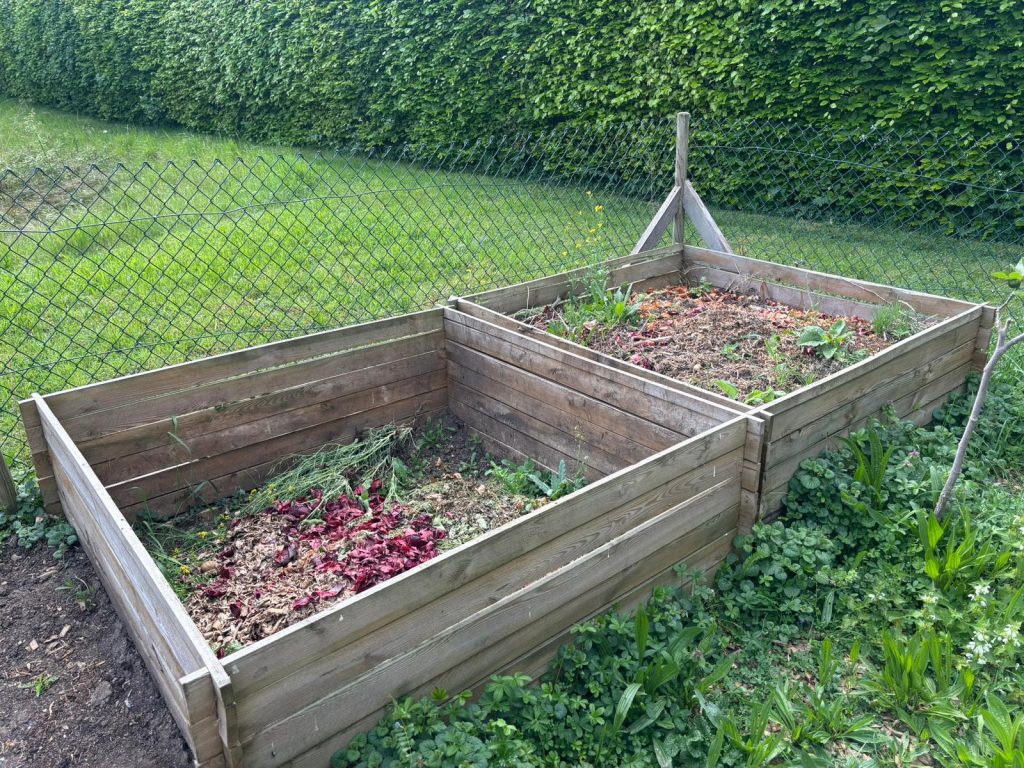
The allotment also follows “no-dig” gardening practices wherever possible. Rather than disturbing the soil unnecessarily, plants are often cut rather than dug out, allowing fungi and microorganisms to thrive naturally underground. “The less you dig, the richer the soil becomes,” Lisa says.
During the winter months, beds are protected with layers of cardboard and compost, helping suppress weeds while shielding the soil from erosion and harsh weather. The team also carefully considers which crops are best suited to different parts of the allotment, particularly in areas where the soil contains large amounts of clay.
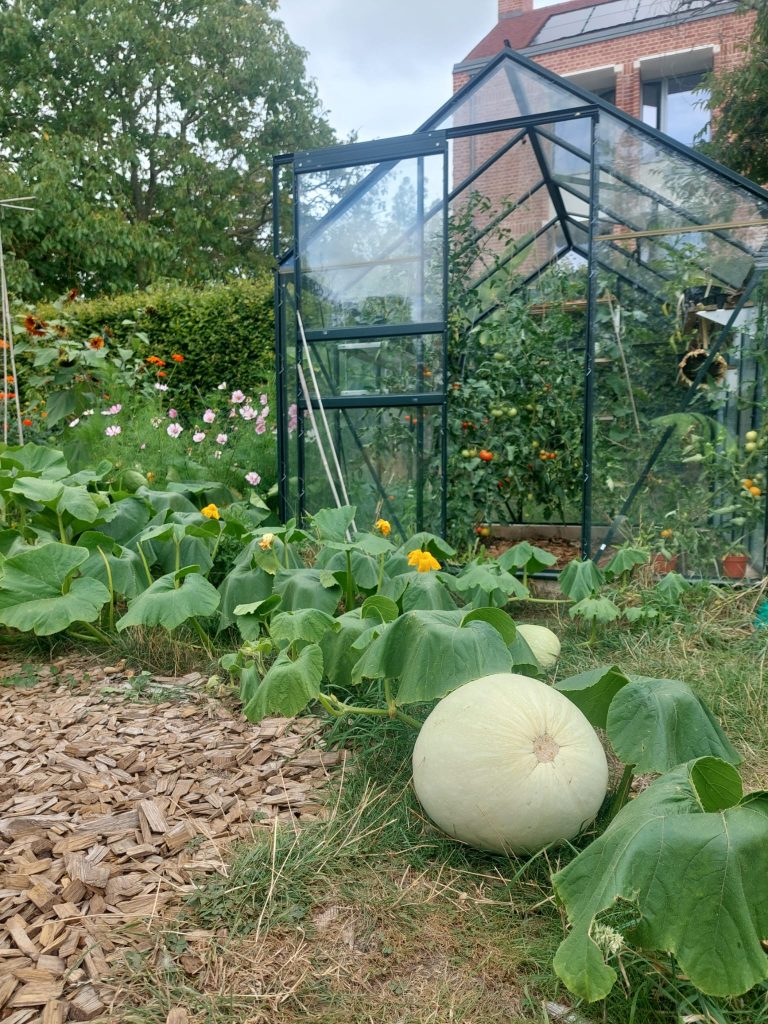
The allotment team is also experimenting with companion planting methods to naturally support soil health and biodiversity. One example is the traditional “Three Sisters” planting method, which combines sweetcorn, climbing beans, and squash or pumpkin in the same plot. Together, the crops create a small symbiotic ecosystem: the corn provides a structure for the beans to climb, the beans naturally replenish nitrogen in the soil, and the squash acts as a living mulch that suppresses weeds and helps retain moisture.
Water conservation has become another major focus, especially following last year’s exceptionally dry summer. The allotment already collects rainwater using a water tank, but the team is now developing a larger rainwater harvesting and watering system designed to reduce dependence on tap water during the growing season. The project was initiated and coordinated by Thomas Eve, PhD student, who also managed the funding application for the new system.
Reducing plastic use is also an increasingly important goal. The members are working to replace plastic materials throughout the allotment wherever possible, including labels and components of the future watering system.
The issue became especially striking for members working directly with the soil. “When you put your hands in the ground, you realise how much plastic is already there,” Lisa reflects. “There are microplastics everywhere. Seeing that in the soil makes the issue feel very real.”
Alongside environmental sustainability, biodiversity is carefully encouraged throughout the allotment. Flowers are planted specifically to attract bees and other pollinators, while some crops are intentionally shared with local wildlife. “Last year we left some of the sunflowers for the birds to eat the seeds,” Lisa shares.
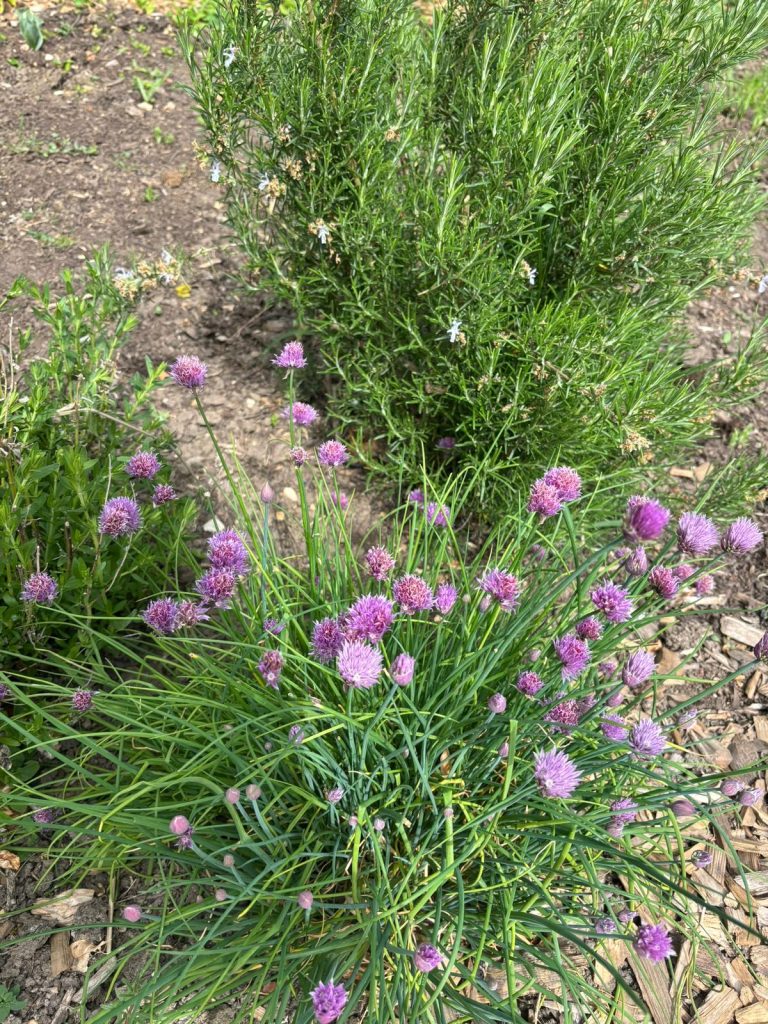
Rather than relying on chemical interventions, the group adapts to the natural conditions of each season. When insects heavily damaged kales and brassicas last year, the team chose not to use pesticides and instead decided to stop growing those crops temporarily. “It’s not a big deal if we don’t have kale one year,” Lisa explains. “We adjust instead of using chemicals.”
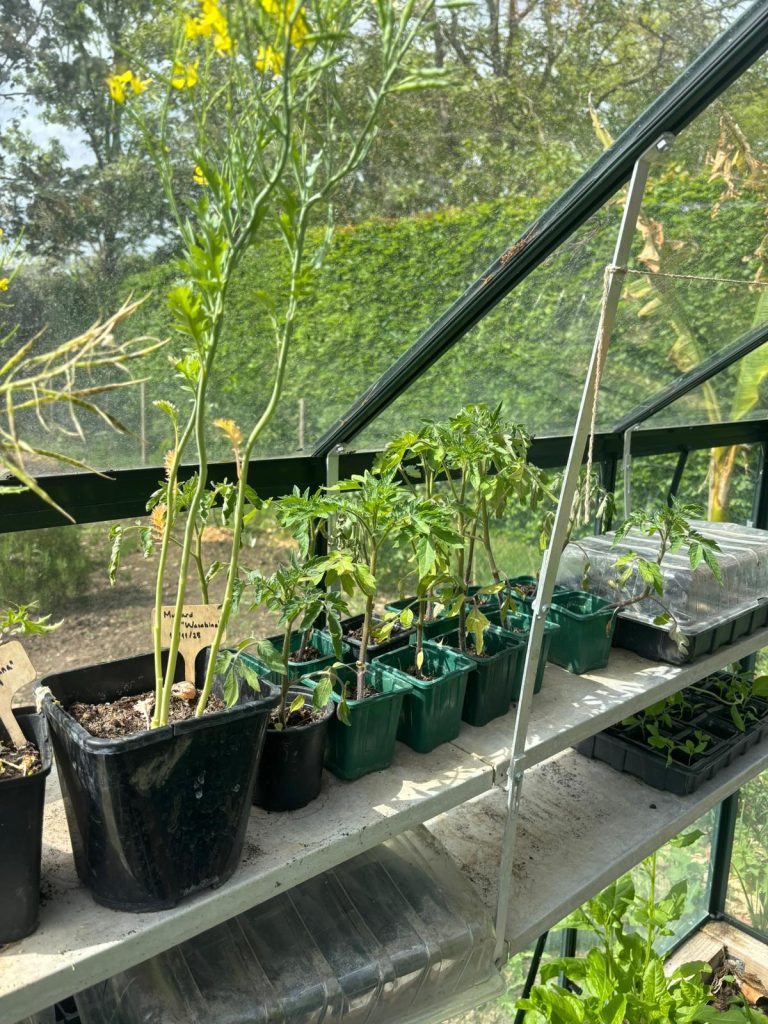
The Allotment also promotes sustainable food practices through seed saving and local sourcing. Seeds are often collected and reused for future growing seasons, while new seeds are purchased from local or environmentally conscious producers whenever possible.
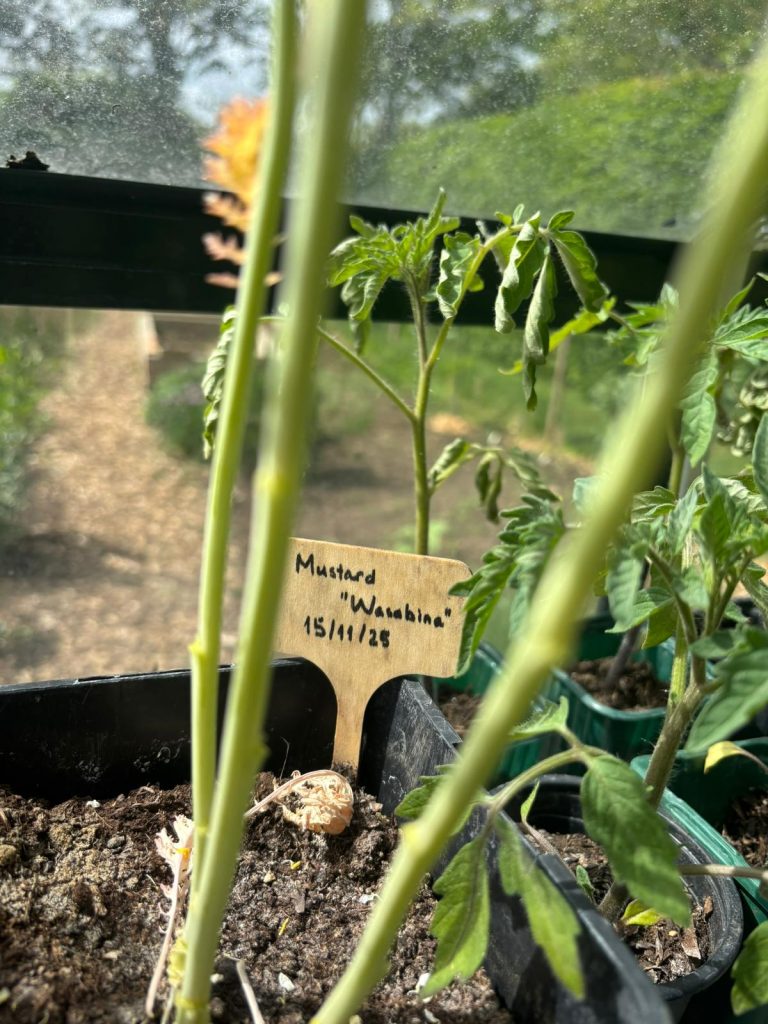
This year’s most ambitious new project is asparagus, suggested by Marc Czarnuszewicz, Research Fellow. Because asparagus cannot be harvested during its first year, the project reflects the allotment’s forward-looking approach to sustainability and stewardship. “People who are here in two years will be the ones enjoying it,” Lisa says.
But for many members of Clare Hall, the allotment represents more than sustainable gardening practices or home-grown produce. It has also become a space for community, wellbeing, and connection.
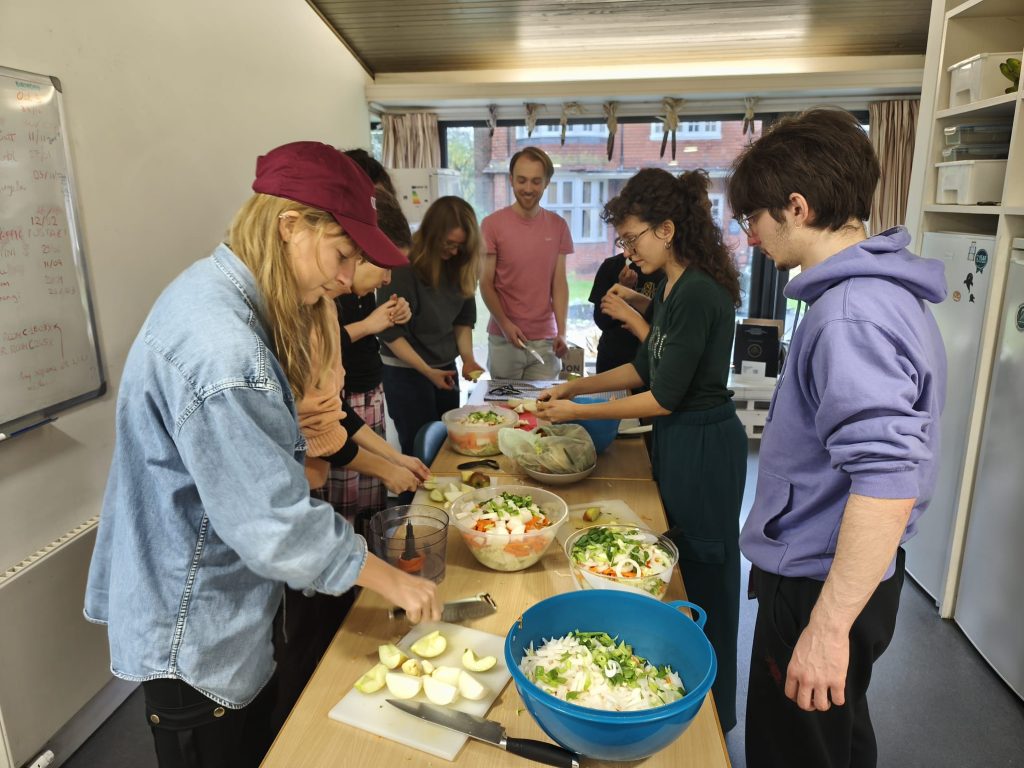
One particularly memorable event was the kimchi workshop hosted by Alumna and Life Member Stella Felsch in November, which proved especially popular among members of the College community. Stella, who was also one of the co-founders of the allotment in 2020/21, played an important role in shaping the project during its early years.
Experienced gardeners work alongside complete beginners, and members are encouraged to participate in whatever way feels comfortable to them. “There’s space for everyone,” Lisa says, “Some people come to garden seriously, others come to chat, have coffee, or simply spend time outside.”
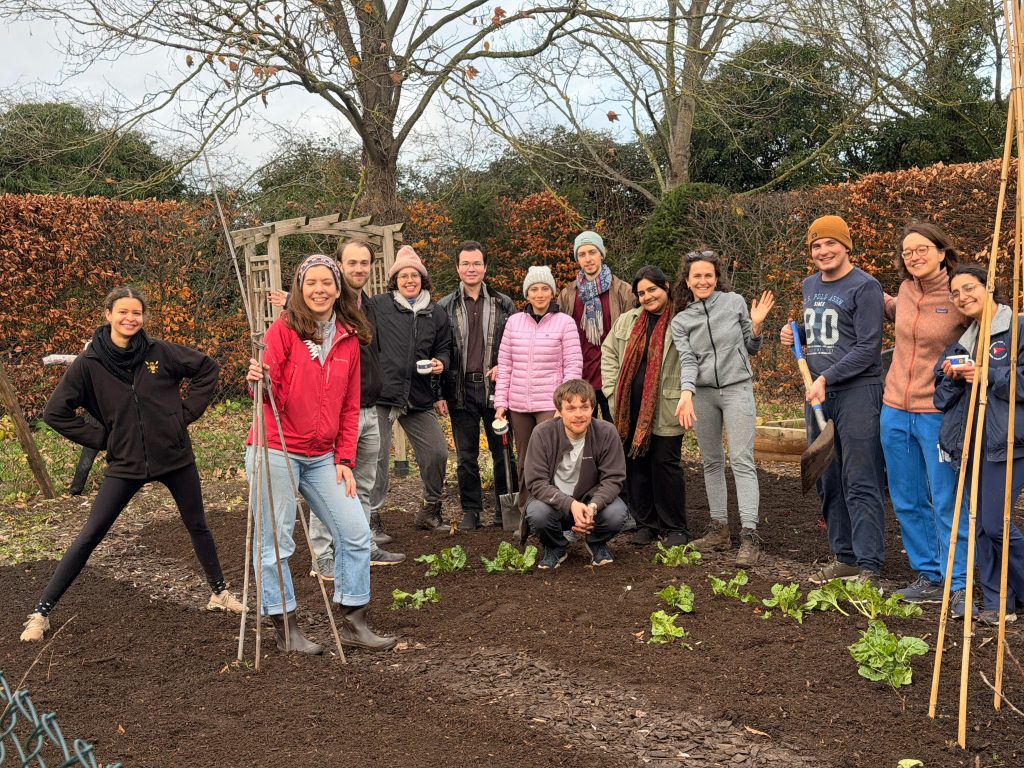
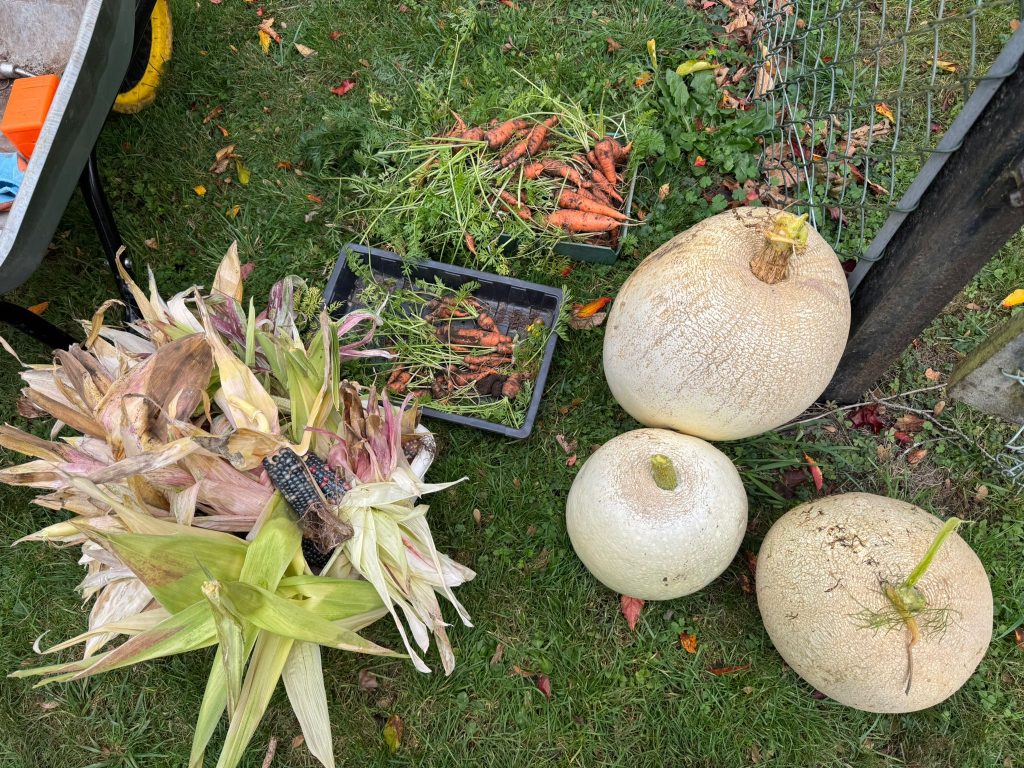
That openness has become one of the allotment’s defining strengths. Members contribute ideas, crops, and traditions from different cultures and backgrounds, shaping the space collectively over time. Last year, Serbian pumpkin seeds introduced by Ana Isaković, PhD student former Head of the allotment, became one of the standout successes, while this year’s asparagus project emerged from the enthusiasm of a newer member.
The allotment’s members hope to continue developing the space not only as a site for sustainable food growing, but also as a welcoming environment where people can pause, connect with nature, and spend time together outside academic life. Future plans include creating more seating areas where members of the College community can read, relax, and enjoy the surroundings.
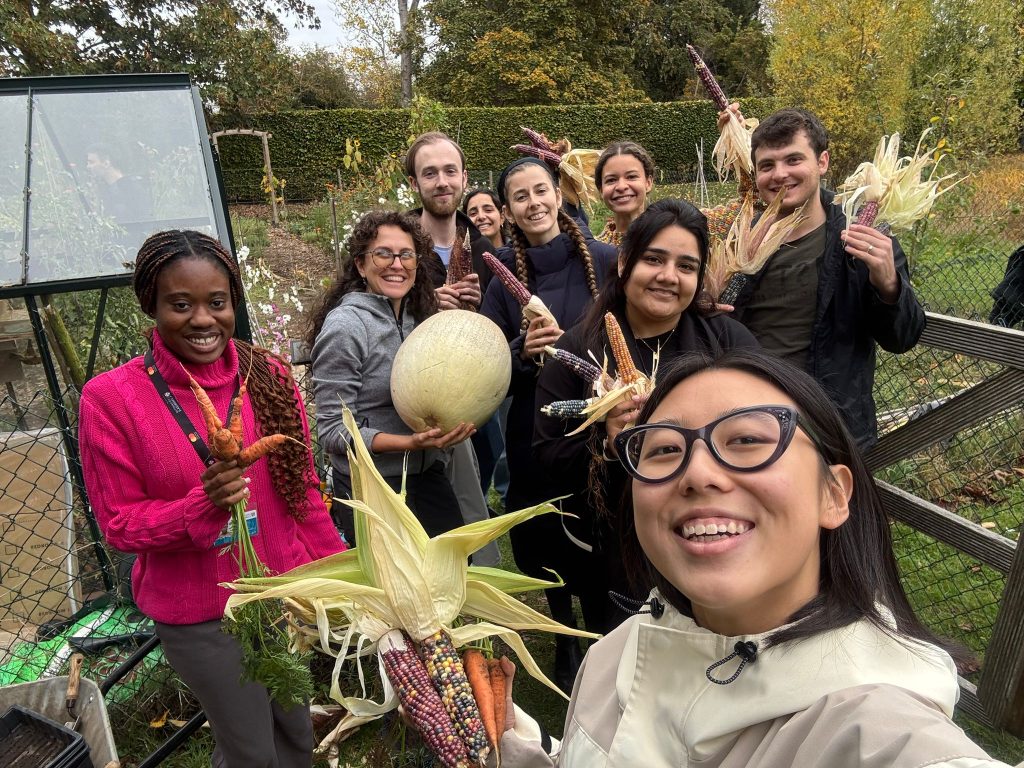
In many ways, the Clare Hall allotment demonstrates that sustainability is not only about large-scale policies or technological solutions. It is also about creating sustainable communities: spaces built on care, collaboration, shared knowledge, and long-term thinking.
“The allotment becomes a reflection of everyone’s contribution. It grows and changes because of the people who are part of it.”
Lisa Valentini, GSB Green Officer for the Allotment
At Clare Hall, sustainability is growing not only in the soil, but also in the relationships formed around it.