
Dr William McMahon joins NASA team in Scotland to explore clues to Mars’ past
Clare Hall Research Fellow and Tutor Dr William McMahon joined NASA scientists in the Scottish Highlands this summer for fieldwork that could help researchers interpret possible signs of ancient life on Mars.

Led by NASA’s Goddard Instrument Field Team, the expedition studied rocks in the Clachtoll region of northwest Scotland. Formed around 1.2 billion years ago, these rocks preserve evidence of environments similar to the ancient lakes and rivers now being investigated by NASA’s Perseverance rover.
The team examined features known as ‘reduction spots’, patches of discoloured rock that can result from microbial activity, but can also form through non-biological processes. Studying examples on Earth could help scientists understand comparable features found on Mars and assess what they might reveal about the planet’s past. Researchers collected samples and used portable instruments to investigate the rocks’ mineral and chemical composition.
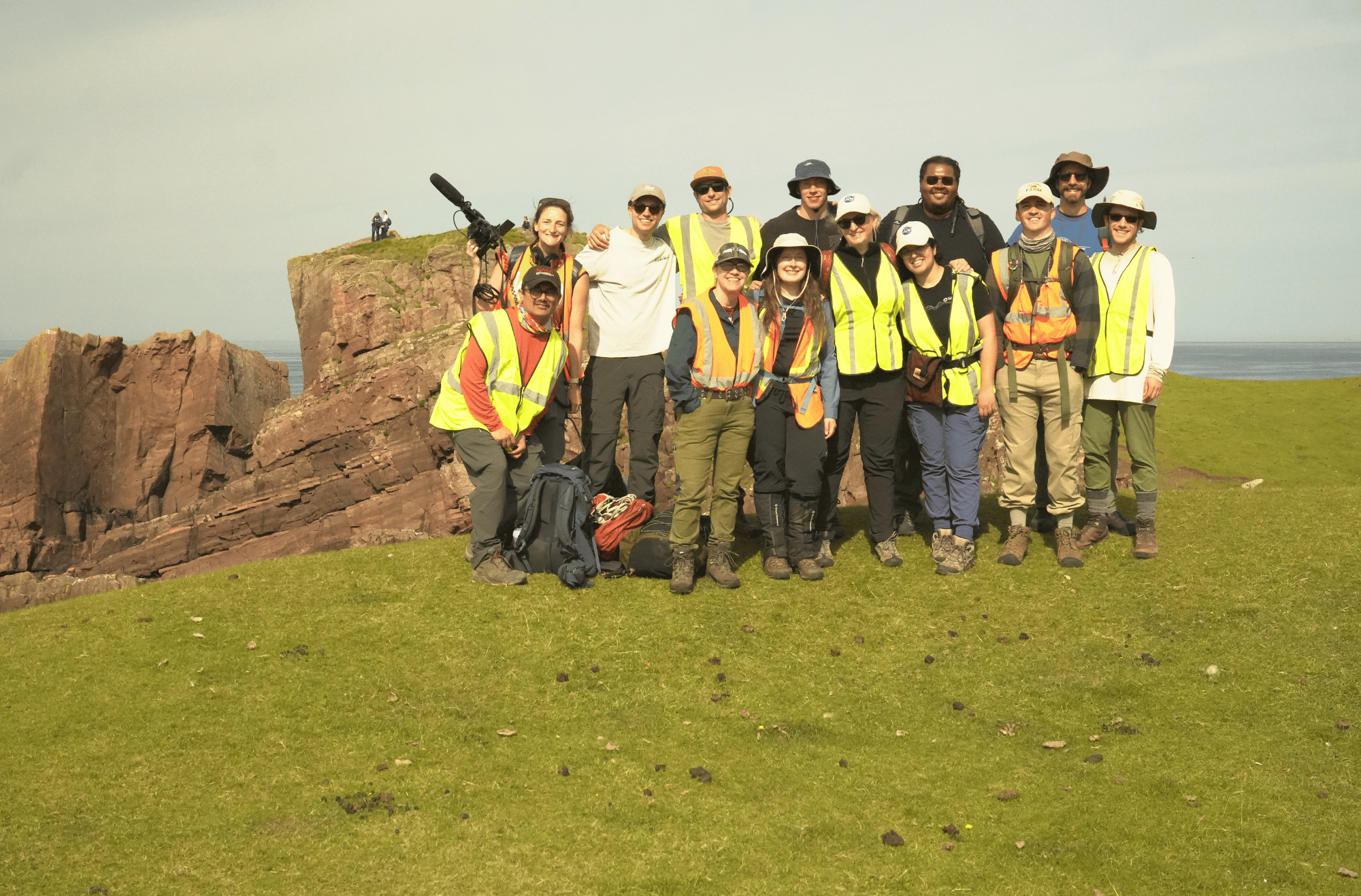
For Dr McMahon, whose research explores how Earth’s surface environments have changed through geological time, the expedition brought a new perspective to a familiar landscape. He has studied the region since beginning his PhD in 2014.
“But I never suspected I’d be joining NASA scientists in studying these rocks,” he told the Department of Earth Sciences.
Further laboratory analysis will help inform the interpretation of Mars rover data and preparations for possible future studies of samples from the Red Planet.
Read more on the Department of Earth Sciences website, NASA’s fieldwork blog, and BBC News.