
Sustainability on the menu: Clare Hall leads the way in greener catering
From expanding plant-based choices to cutting food waste and reducing the environmental impact of meat, Clare Hall’s catering team has made sustainability an increasingly visible part of everyday College life. GSB Green Officer Rishul Karia and GSB Secretary Robyn Schnell look at the progress made over the past year, the research behind it, and what comes next:
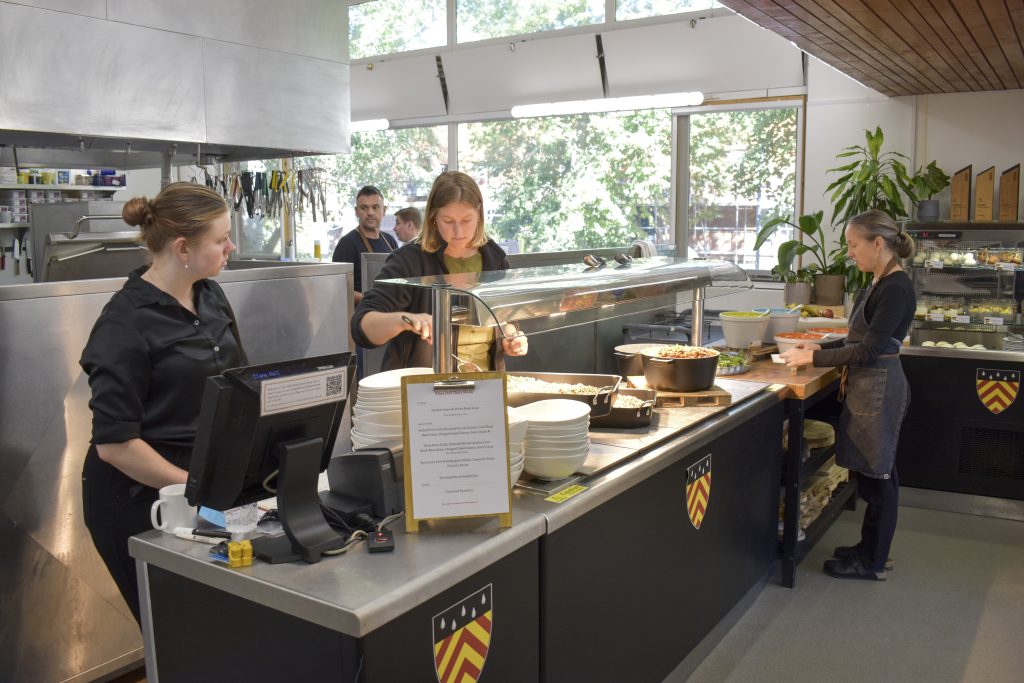
Led by kitchen manager Sabrina Gyles, Clare Hall’s catering team has implemented a multitude of sustainability practices over the 2025/26 year. Their efforts were recently recognised at the most recent University Sustainability Awards where the team was awarded ‘Highly Commended’ in the Best Environmental Improvement category. In fact, Clare Hall has recently become the first Cambridge college to surpass the plant-based catering thresholds as set out by the 2024 CamEATS ZERO Sustainable Food Initiative!
I am incredibly proud of what the catering team has achieved over the past year. Our aim has been to make genuinely sustainable food the everyday choice without compromising on quality, nutrition, affordability, or the experience. By working closely with our students, fellows, and college members, we have shown that meaningful environmental improvements can be achieved while maintaining both customer satisfaction and meal uptake. Being recognised by the University Sustainability Team is a wonderful reflection of the team’s creativity, commitment, and hard work. We look forward to building on this progress and sharing what we have learnt with others across Cambridge.
Sabrina Gyles, Kitchen Manager
Through this initiative, CamEATS ZERO sets out guidelines shaped by science-based priority actions to minimise the environmental impact of the University’s college catering operations by promoting sustainable practices and consumption. These recommendations prioritise four actions to be implemented by October 2026:
1. Increasing the proportion of plant-based (vegan) meals offered with the future objective of these being at least half of the meals offered.
2. Reducing ruminant meats (beef, lamb and venison) offered with the later goal of phasing such ingredients out.
3. Only serving seafood that has been sustainably sourced.
4. Reducing food waste by at least 50%.
We cannot meet the targets of the Paris Agreement without a major shift towards plant-based diets. It’s fantastic to see Clare Hall following both the climate and behavioral psychology research and leading the way on a transition to plant-based catering across Cambridge Colleges, starting by implementing the CamEATS ZERO Guidance. Given we are now at October 2026, the initial deadline for that guidance to be implemented, I hope to see other colleges following these efforts with the urgency the climate and nature emergency demands. I look forward to seeing Clare Hall continuing its journey towards sustainable plant-based catering.
Dr Chloe Balhatchet, University of Cambridge Environmental Sustainability Team
Impressively, Clare Hall’s plant-based provision now stands at over 50% of the main meals served. In achieving this, Head Chef Clive Rodger has implemented readily available wholefood proteins such as lentils, tempeh and tofu into the plant-based meals, rather than relying on ultra-processed foods as substitutes.
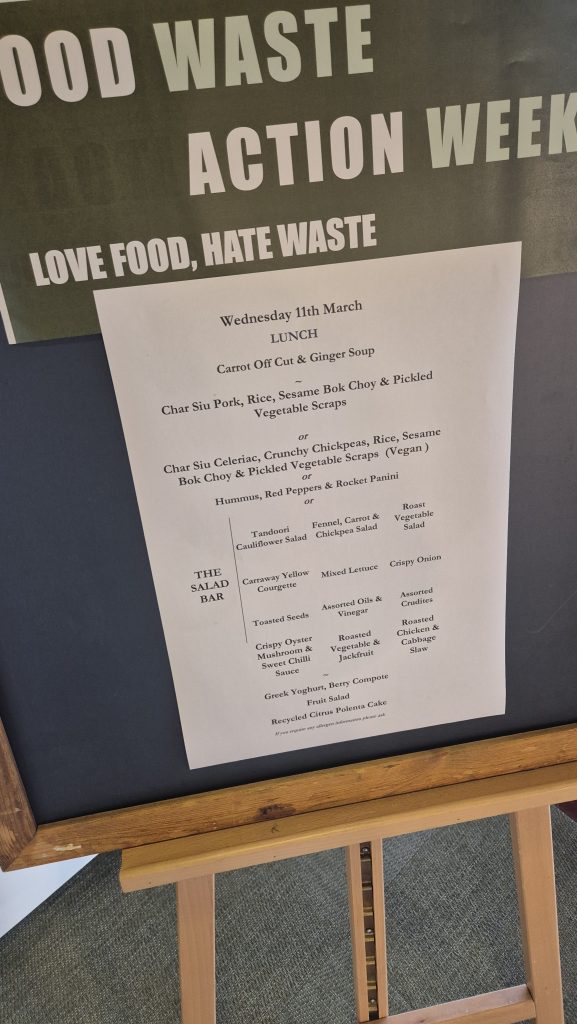
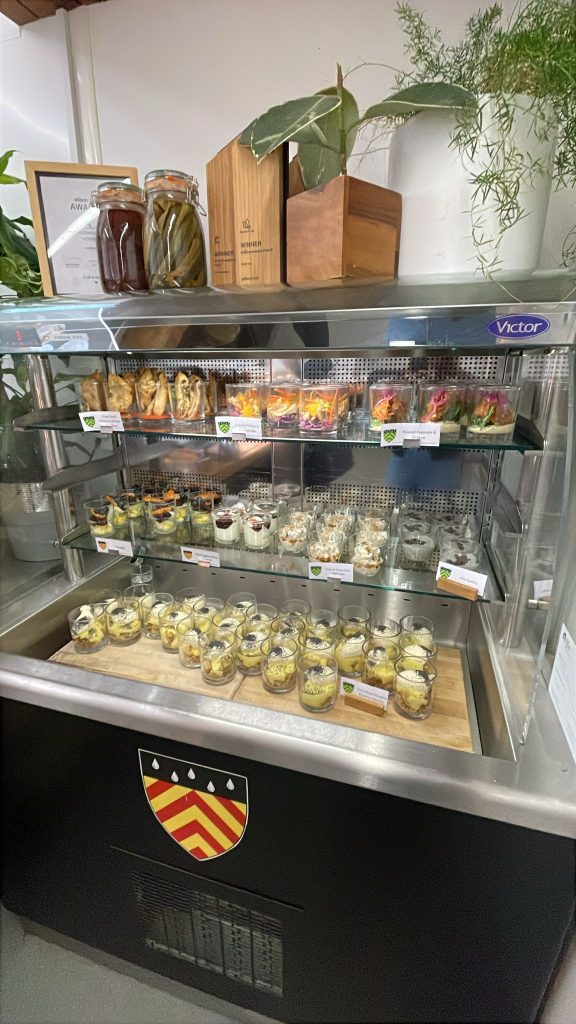
As someone who eats vegan, it is so nice that the menu at Clare Hall always includes a plant-based option. The kitchen staff are also really open to introducing more varied and healthy vegan options at formal dinners, with people often mentioning they prefer the plant-based alternative.
Emma Kuehnelt, GSB Vice-President 26/27
Alongside this, the catering team has introduced its ‘Carbon Crushers’ initiative every Thursday lunch service during term which seeks to further reduce ruminant meat. While still served, this initiative reduces ruminant meat by 40% and introduces plant-based alternatives such as lentils. From October 2026, ‘Carbon Crushers’ will be extended to whenever ruminant meat appears on the dining hall’s weekly menu. Together with the transition to plant-based alternatives and depending on the replaced meat, these practices save approximately 450kg of CO2e and 150,000 litres of water per week. These savings are equivalent to the emissions produced from driving 2,600 miles in a standard car or taking 4,300 five-minute showers every week!
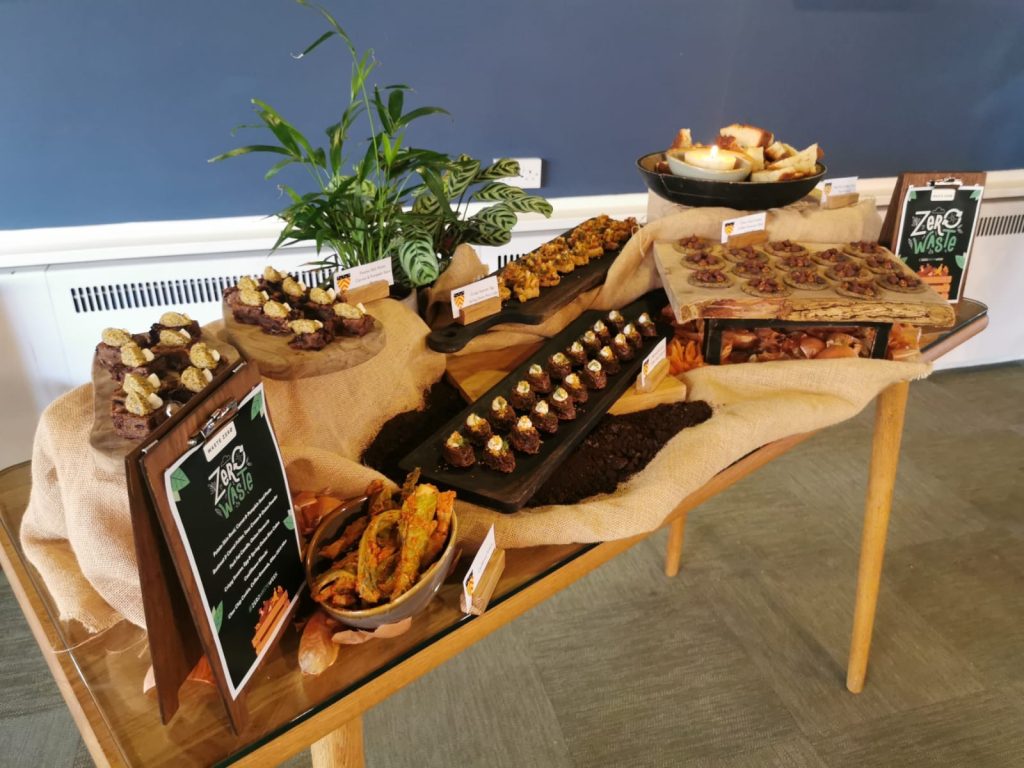
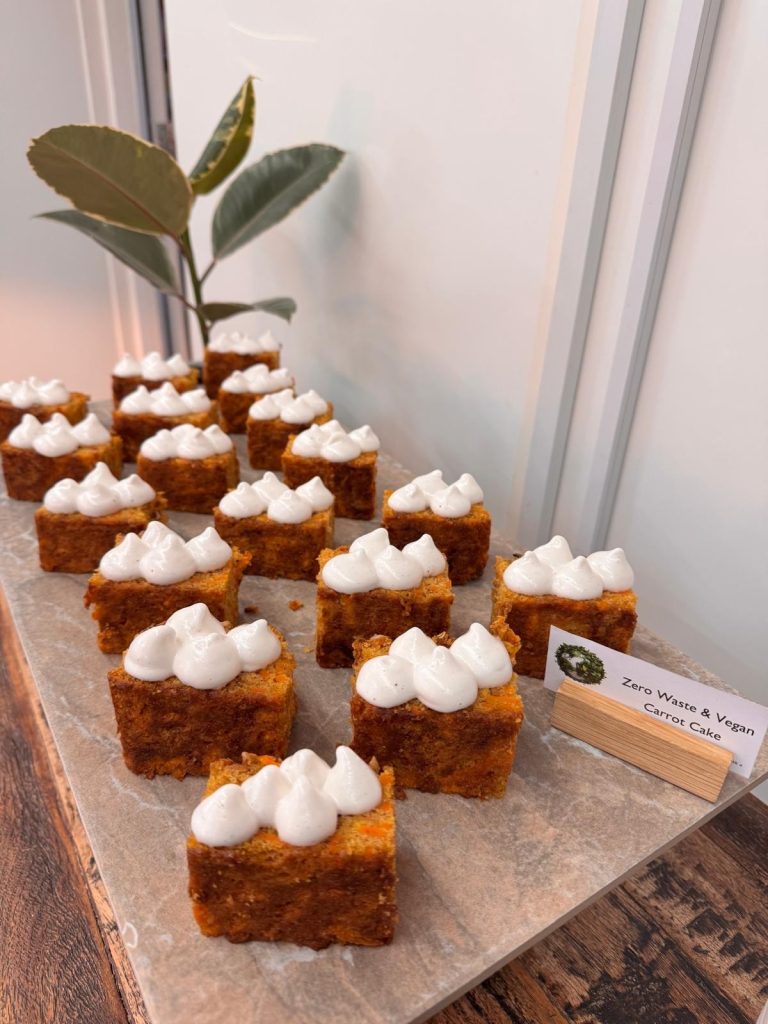
Furthermore, the kitchen uses seasonal local produce wherever possible and regularly champions sustainable practices through themed menus and ‘Taster Tables’ which focus on eliminating food waste and utilising offshoots. In the same vein, the takeaway scheme has been running after every dinner, which allows leftovers to be purchased for £1 provided members bring their own containers. Additionally, any desserts and salad items leftover from the week are given away free of charge after dinner service ends every Friday. The kitchen team also supplies the student-run allotment biweekly with surplus vegetable peelings for composting to make sure very little goes to waste.
Over the course of this year, the catering team has gone above and beyond the recommendations of CamEATS ZERO, becoming the first Cambridge college to partner with Forward Food to further enhance plant-based options beyond the usual expectations. This program uses research-led strategies based on the work of Cambridge academic Paul Lohmann to encourage consumers toward more sustainable choices, alongside innovative chef training in plant-based nutrition. The College will host the first of these training events soon and has invited other chefs across Cambridge to join.
It’s fantastic to be supporting Clare Hall College as they continue to enhance their plant-based food offering. By embracing more plant-forward menus, they are showing real leadership in sustainable student dining and helping to make healthy, climate-friendly choices a normal and appealing part of everyday college life.
Imogen Clemett, Forward Food
Importantly, there has been no statistically relevant change in the number of meals served to students and staff as a result of the implementation of all these initiatives thus far. By demonstrating sustainable food provision does not come at additional costs, Clare Hall has set an example for other colleges who cite rising costs as either a concern or barrier to adopting such sustainable practices. Each step Clare Hall has taken has been grounded in scientific reasoning with regular and keen discussion among those who partake in the dining hall experience. As such, further feedback on this progress is highly encouraged through direct contact to either kitchen.manager@clarehall.cam.ac.uk or gsb.green@clarehall.cam.ac.uk.
Overall, the strides made by the catering team towards more sustainable practices over the last year are commendable and will continue as Clare Hall seeks to reach new heights in terms of its sustainability goals in years to come.
Written by Rishul Karia (GSB Green Officer 2026/27) and Robyn Schnell (GSB Secretary 2026/27)