
60th Anniversary Tours and Talks: A celebration of curiosity and community
As part of its 60th Anniversary Festival of Events, Clare Hall hosted a truly vibrant and inspiring programme of tours and talks from 16th–19th April, bringing Fellows, students, alumni, and friends together for a joyful celebration of learning, discovery, and community.
Thursday 16 April
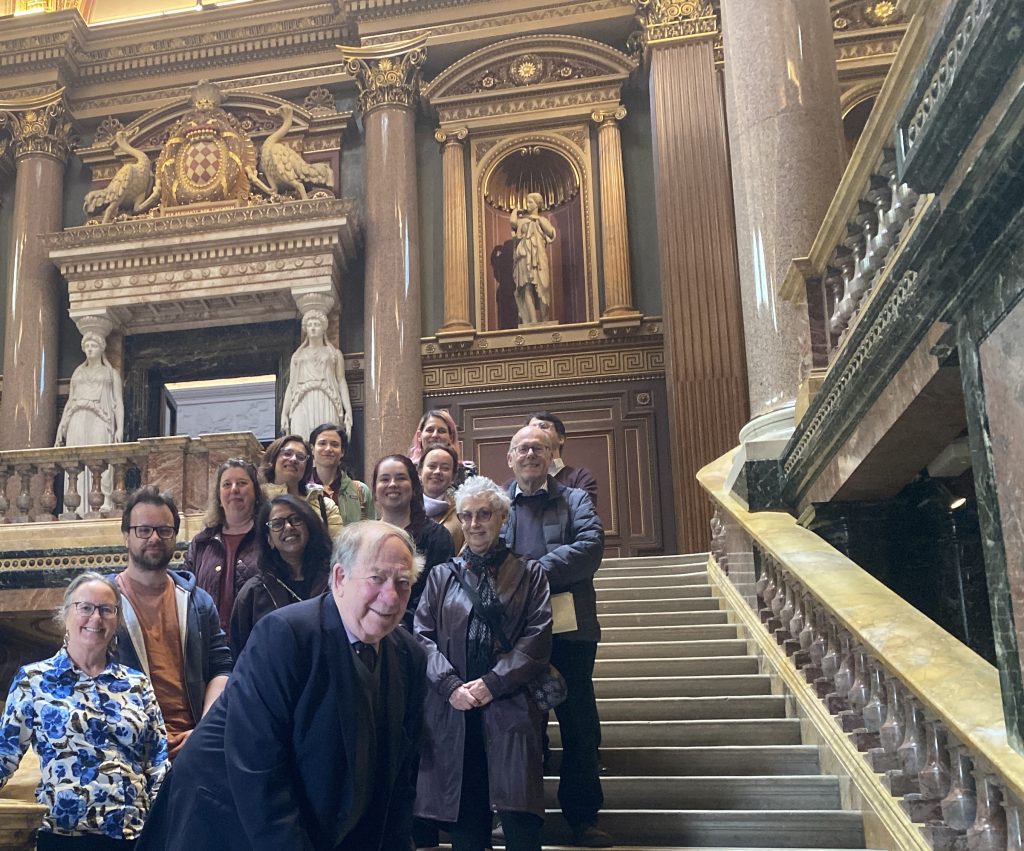
The programme began with a special visit to the Fitzwilliam Museum, where Dr Robert Anderson, Emeritus Fellow, led an engaging and wide-ranging tour. Moving through the galleries, participants traced the story of human creativity and expression, from the earliest forms of writing in cuneiform to the artistic traditions of Egyptian, Greek, and Roman civilisations, as well as beautifully crafted ceramics from across periods and cultures. The visit concluded on a relaxed note with coffee in the Museum café and a chance to browse the gift shop, rounding off a rich and enjoyable start to the celebrations.
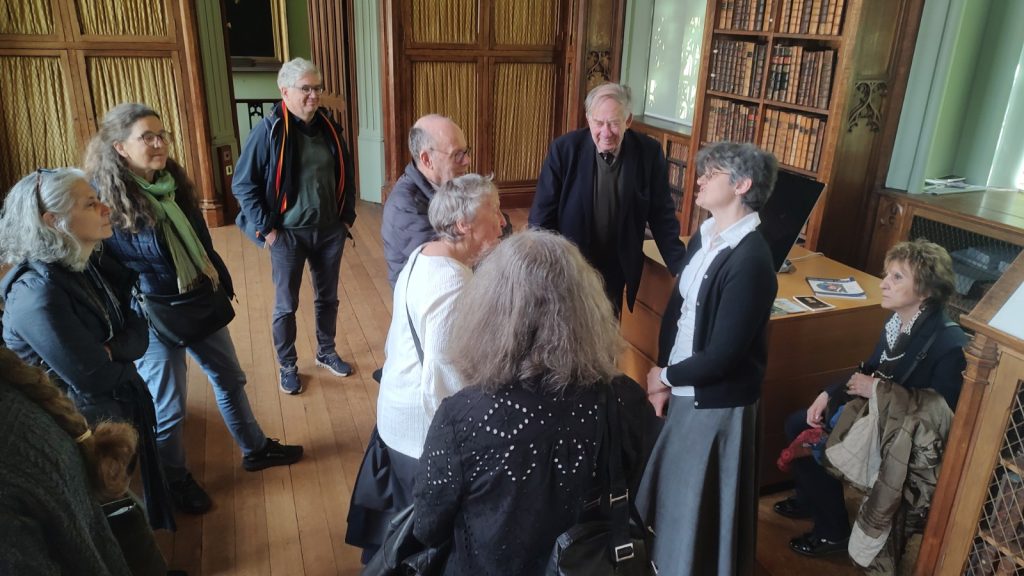
Afterwards, guests enjoyed a rare opportunity to explore the historic Parker Library of Corpus Christi College. Guided by Fellow Librarian Philippa Hoskin, the visit offered a glimpse into one of Cambridge’s most treasured collections of manuscripts.
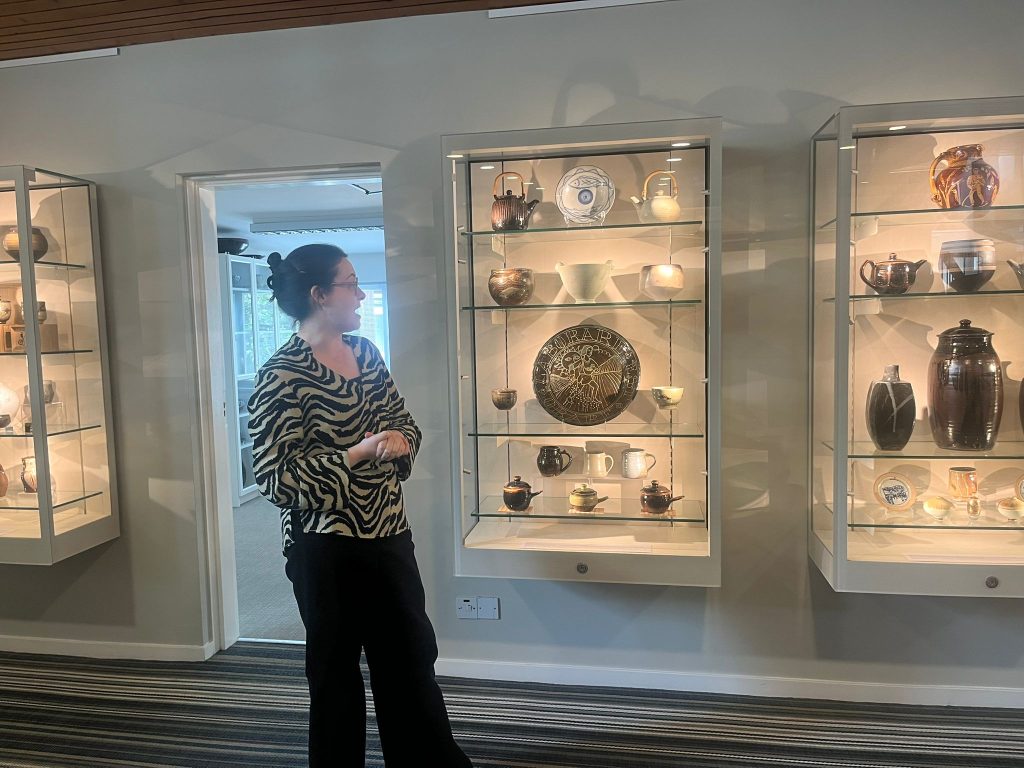
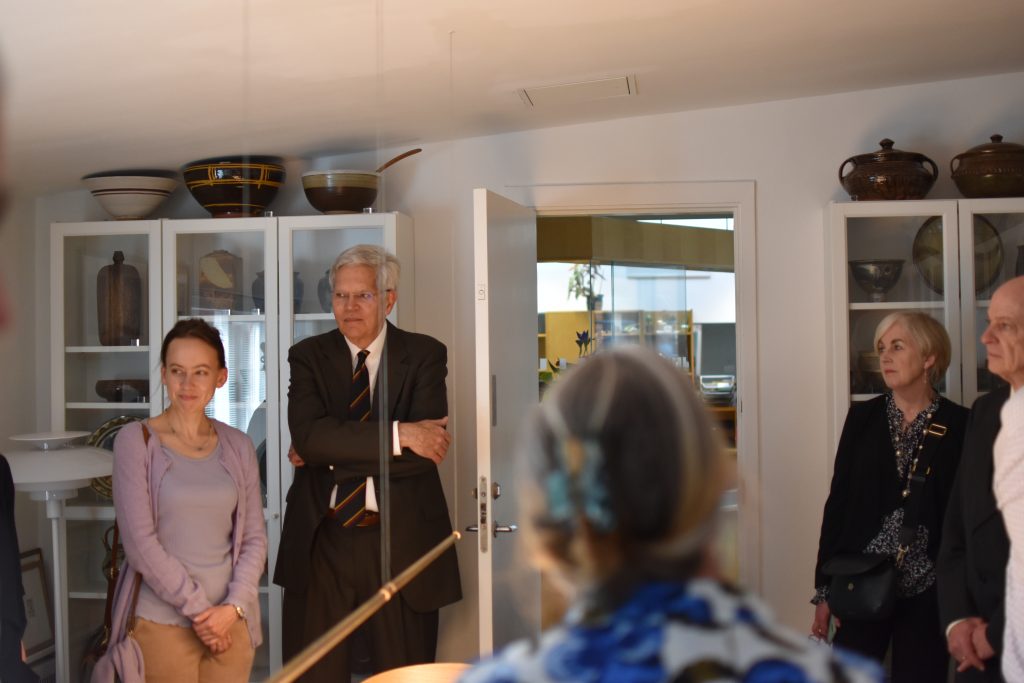
Before the Tanner and Ashby Lectures, members enjoyed a fascinating and hands-on exploration of the College’s Bell Collection of ceramics. Beginning outside the Porters’ Lodge, where a selection of pieces was on display, Helen Ritchie, Associate of Clare Hall and Senior Curator at the Fitzwilliam Museum, introduced participants to the rich variety of potters and styles represented in the collection, with a particular focus on the work of Bernard Leach. Guests were then invited into the President’s Meeting Room to view the full collection up close, ask questions, and deepen their understanding. Along the way, they discovered some of the practical care behind ceramics, including how glaze protects pots from fingerprints and why extra care is needed when handling unglazed pieces.
Friday 17 April
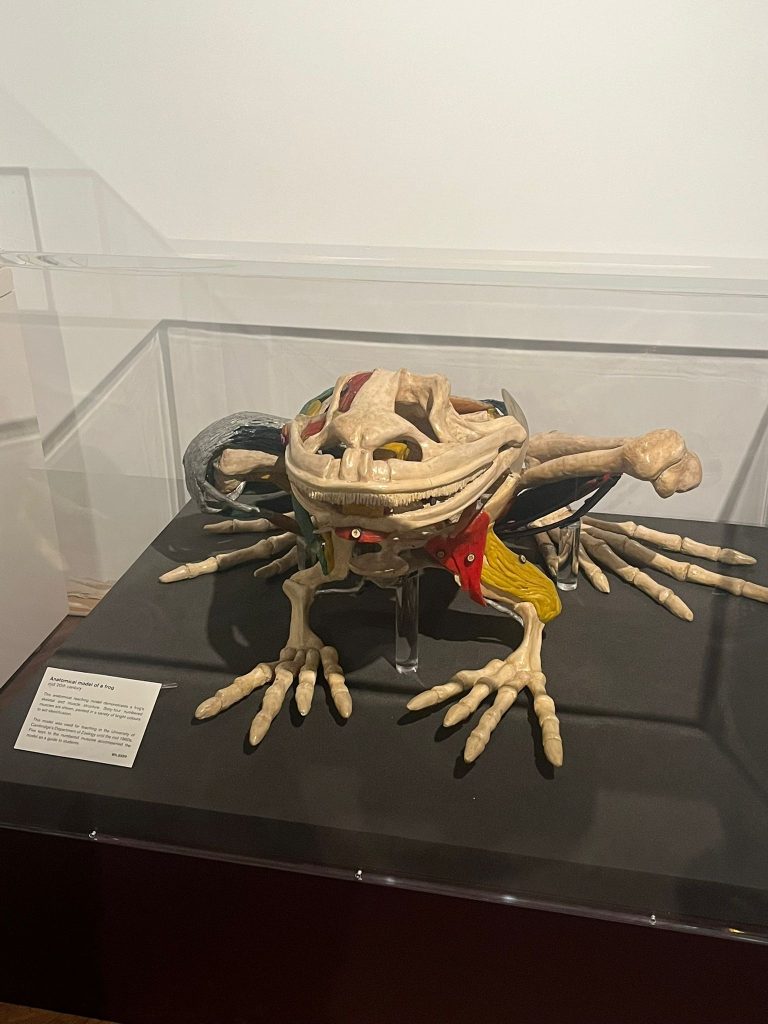
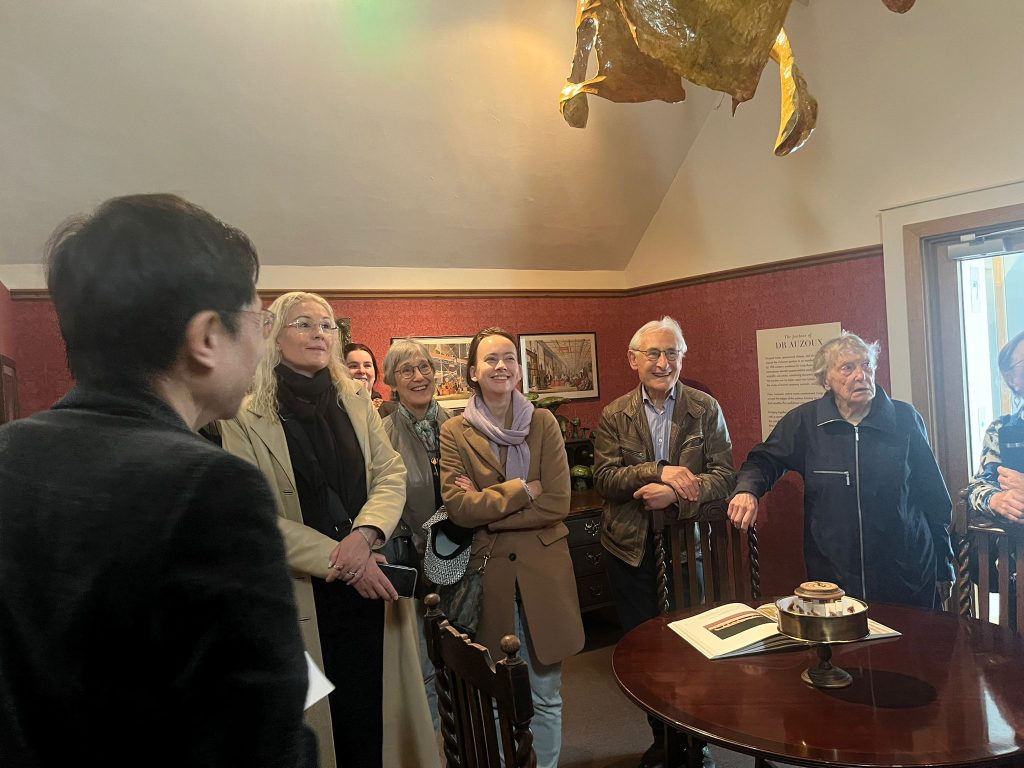
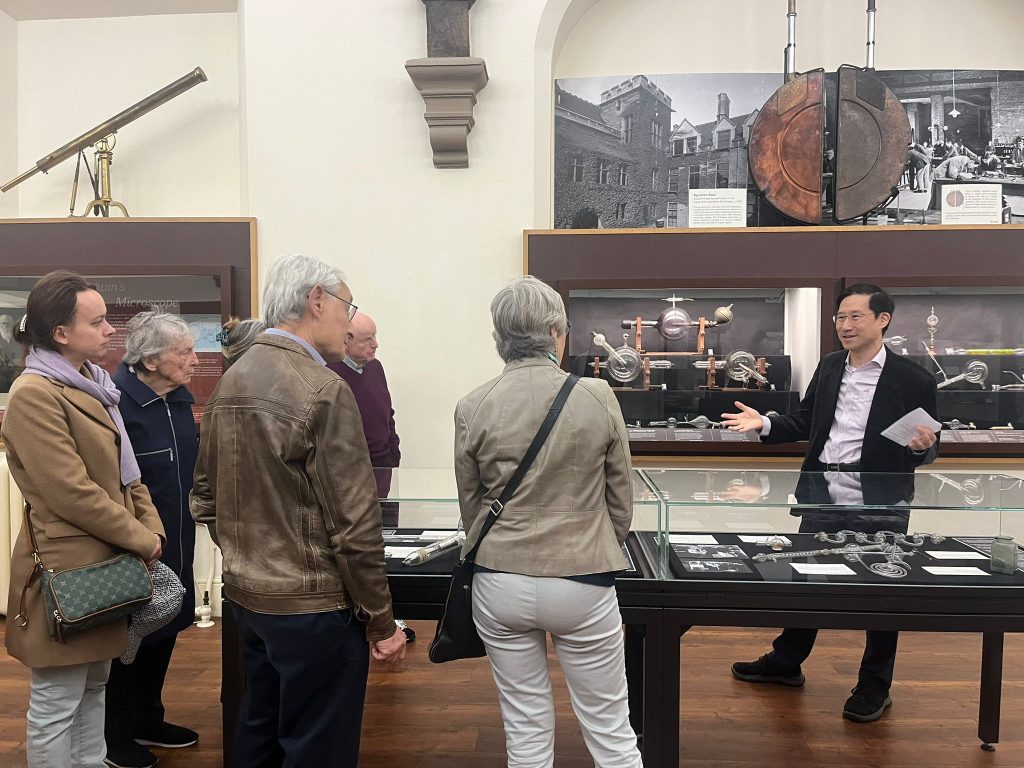
Friday opened with a lively and illuminating tour of the Whipple Museum of the History of Science, led by Fellow Professor Hasok Chang, whose enthusiasm made the history of scientific discovery feel immediate and alive. Moving through two floors of remarkable objects, participants explored the origins and evolution of scientific inquiry, from the magnificent 18th-century Grand Orrery built by George Adams to William Herschel’s Newtonian telescope. Along the way, the tour reflected on the stories behind scientific breakthroughs, including the updated recognition of Rosalind Franklin in the discovery of DNA. Visitors also encountered displays of replicas and “fakes,” an interactive room featuring a wall of calculators charting their development over time, and an upstairs gallery showcasing an eclectic range of globes alongside a beautifully detailed papier-mâché silkworm. Also, lots of frogs have been found around the museum.
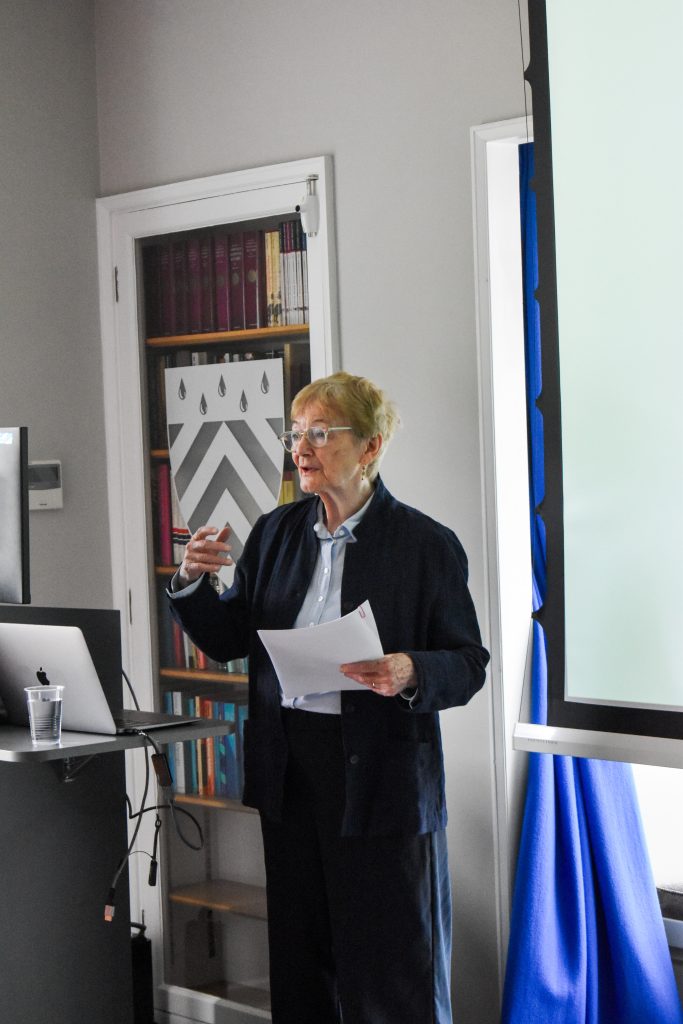
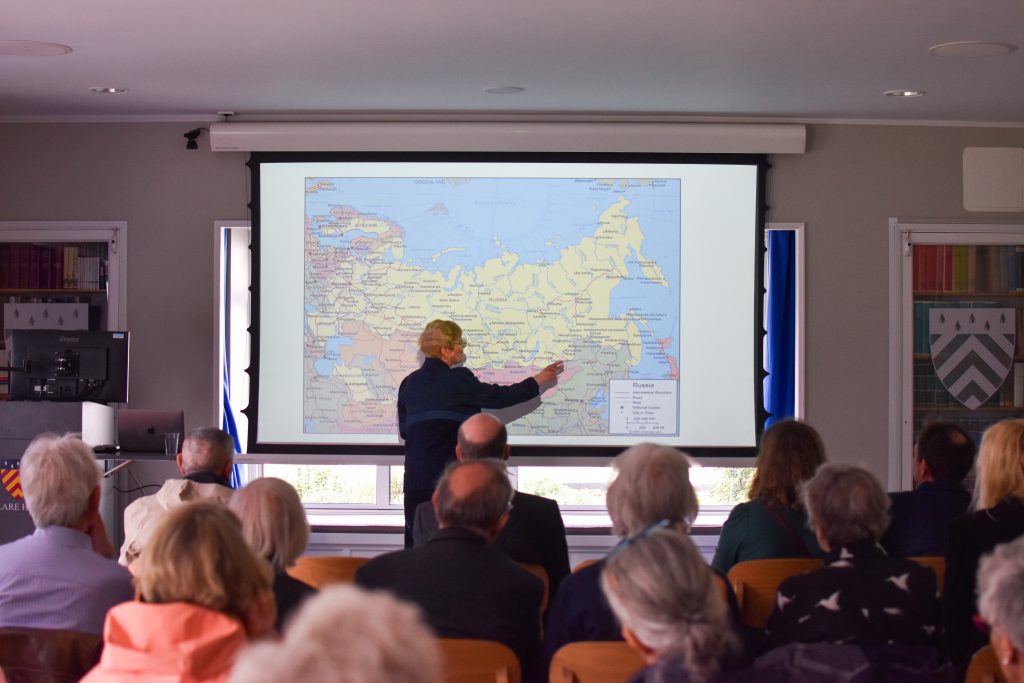
Back at Clare Hall, Professor Dame Caroline Humphrey, Honorary Fellow, delivered a compelling and deeply insightful lecture titled “Putin’s bestowals: awards and recompense in present-day Russia.” Drawing on her extensive expertise in the anthropology of Eastern Russia, she explored the complex systems through which recognition, loyalty, and power are negotiated in contemporary Russian society. The talk examined how state awards and forms of recompense function not only as symbols of honour, but also as instruments of political influence, shaping relationships between individuals and the state. Rich in detail and analysis, the lecture offered a nuanced perspective on authority and governance in modern Russia, prompting lively discussion and reflection among the audience.
This was followed by a reflective talk from Fellow Professor Erma Hermens and Professor Alan Short, President of Clare Hall, who shared their passion for Netherlandish art, drawing on works from the collection at the President’s Lodge.
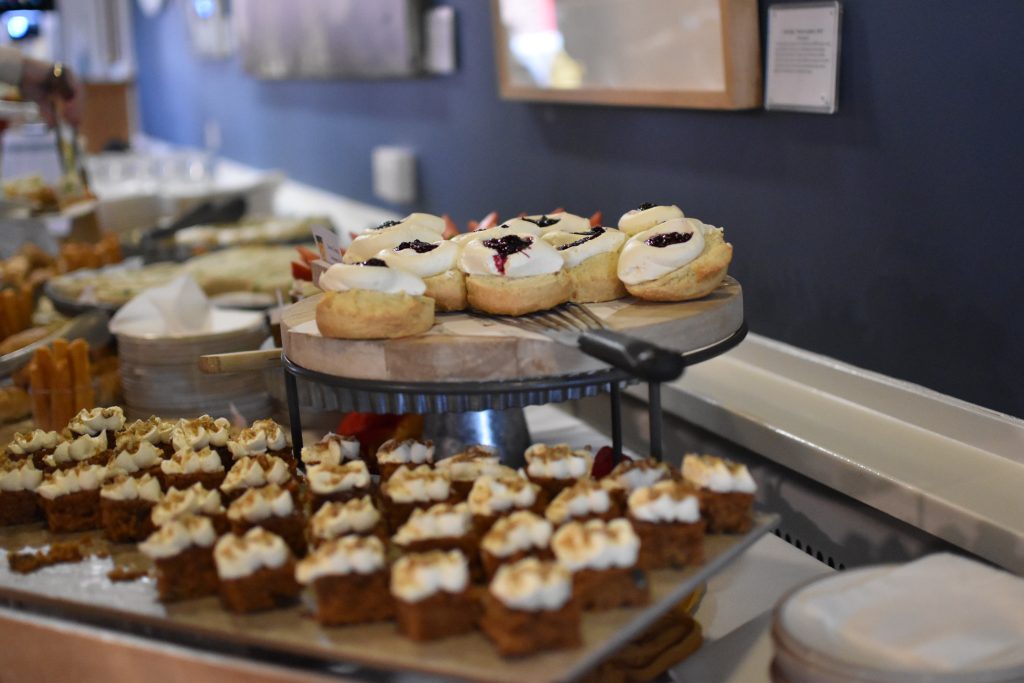
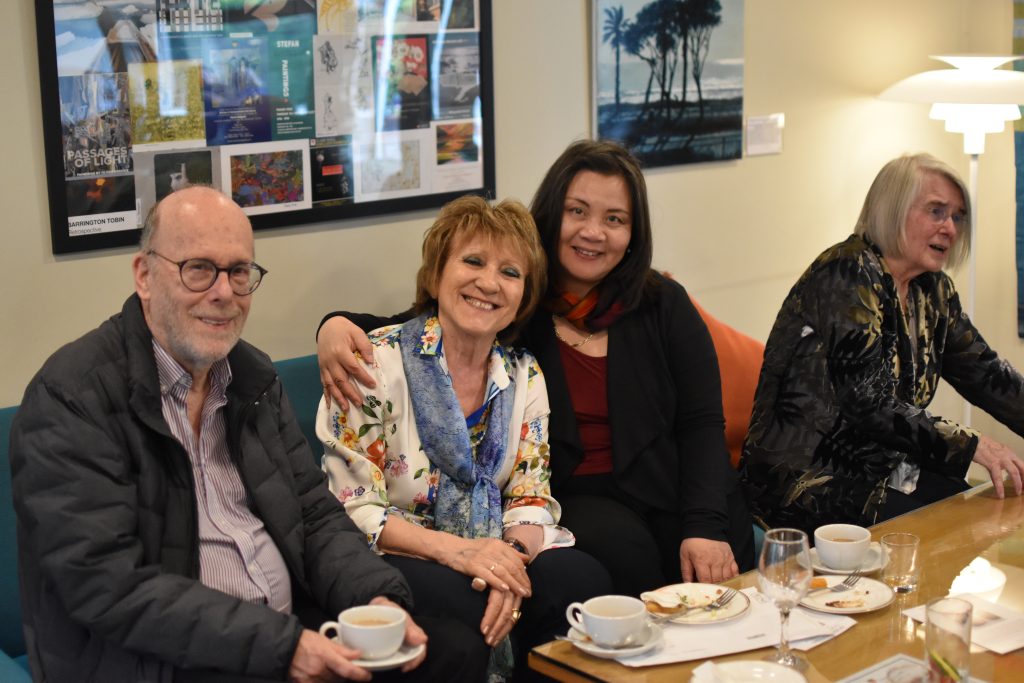
After a relaxed afternoon tea with cheese straws, sandwiches, and cake, Professor Frances Spalding, Chair of the Art Committee, and Dr Andreas Mørkved Hellenes, Visiting Fellow, invited the audience to rediscover the Clare Hall Art Collection, tracing its development over six decades and reflecting on the role of art within the life of the College.
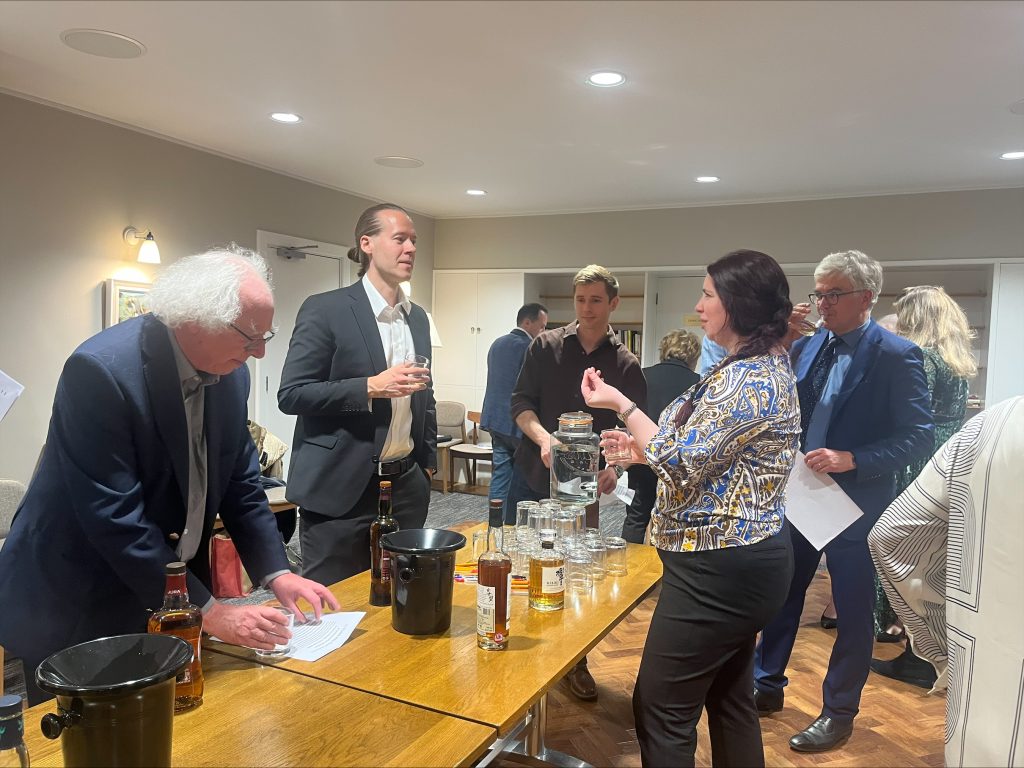
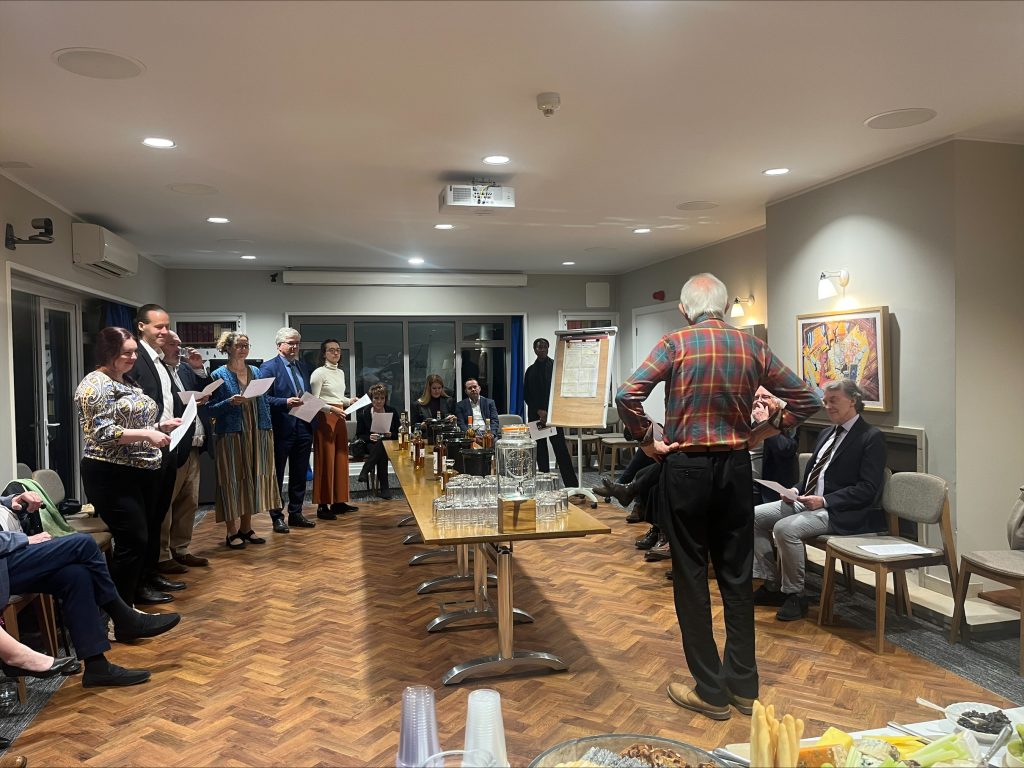
The day ended on a merry and much-anticipated note with a whisky tasting led by Stephen Bourne, Emeritus Fellow and enthusiast. Guests were introduced to a thoughtfully curated selection of twelve whiskies from around the world, spanning Scotland, the USA, India, and Japan, with one Japanese bottle proving a particular favourite among many. Alongside the tasting, participants learned how factors such as geography influence flavour, including how distilleries located near the sea can produce whiskies with a distinctive salty character shaped by coastal air. Practical tips were also shared, such as adding a drop of water to enhance aroma and taste. Following the introduction, guests were invited to explore the collection at their own pace, with spittoons provided for those who wished to sample more lightly, creating a relaxed and sociable close to the day’s programme.
Saturday 18 April
Saturday began with a visit to the magnificent King’s College Chapel, where Professor Jean Michel Massing, art historian and Fellow of King’s College, offered a richly informed tour, drawing attention to the artistry and history of one of Cambridge’s most iconic spaces.
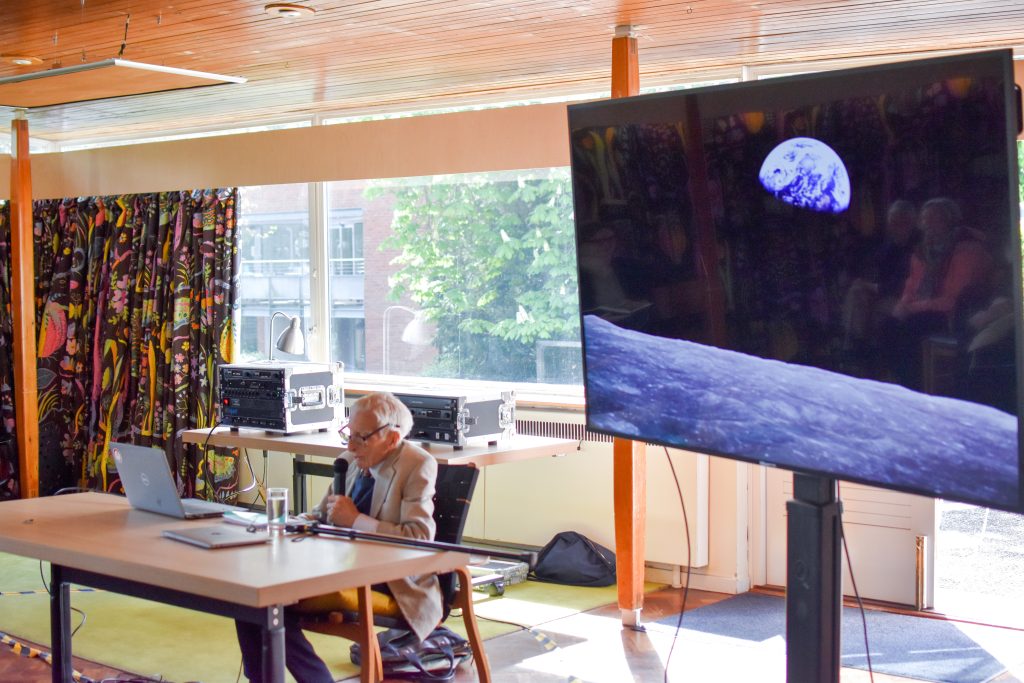
Later, Professor Lord Martin Rees, Honorary Fellow, delivered a wide-ranging and thought-provoking lecture titled “The World in 2050 and Beyond”. Reflecting on the profound technological and environmental challenges facing humanity, he explored how advances in artificial intelligence, biotechnology, and space science may shape the future of our planet. The lecture considered both the opportunities and risks of an increasingly high-tech world, from existential threats to the responsibilities of global cooperation. This was followed by a lively and engaging Q&A session with Dr Charlotte Hammer, Assistant Professor at the Centre for the Study of Existential Risk.
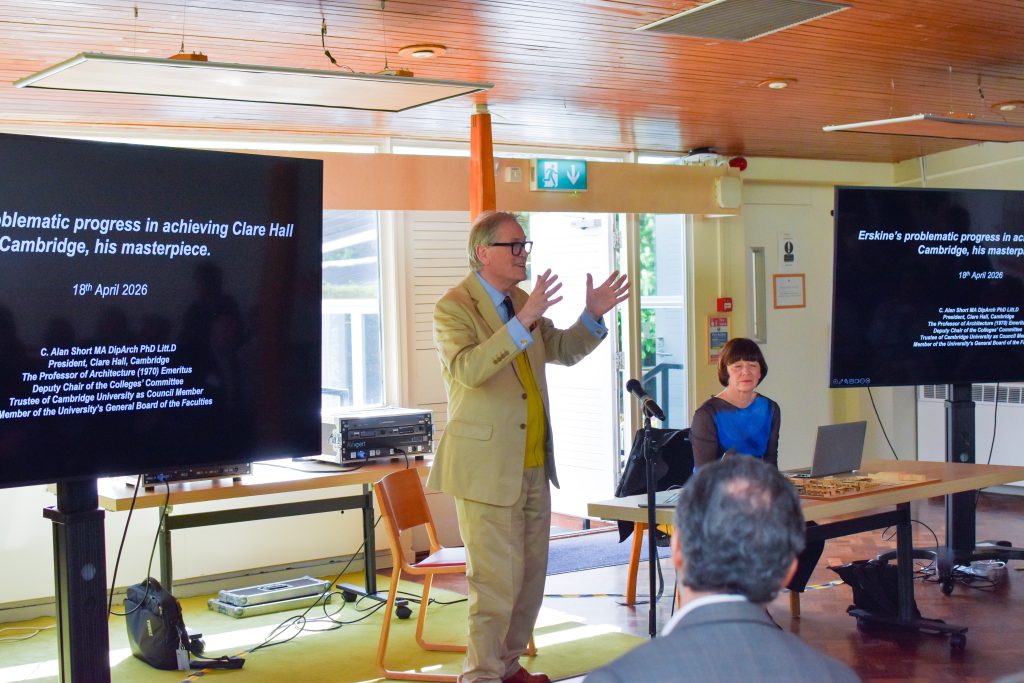
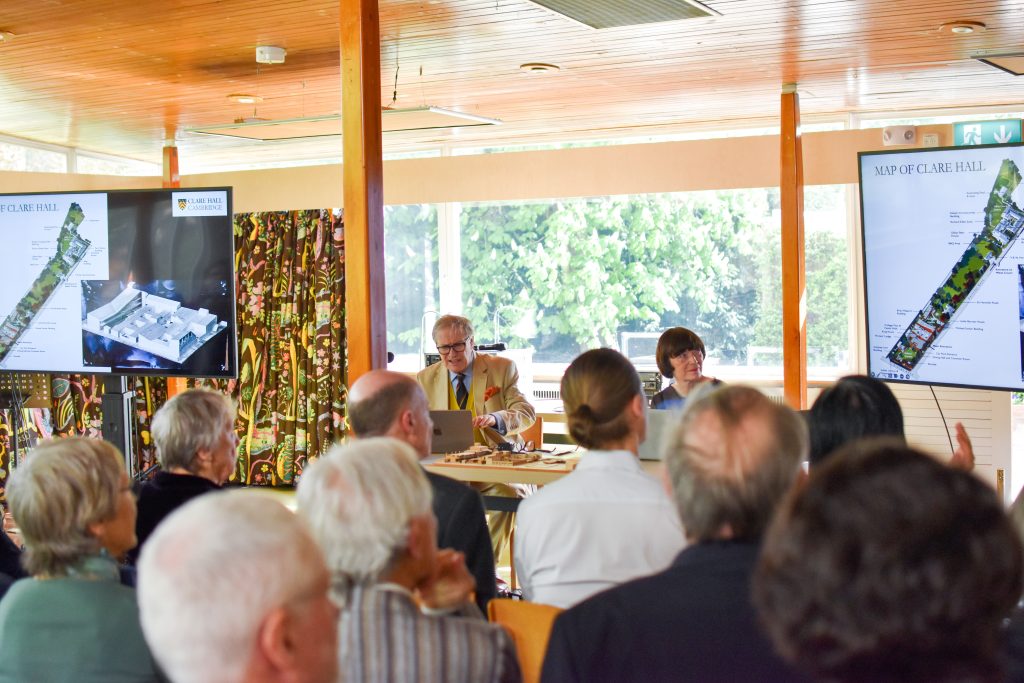
The programme continued with a fascinating exploration of the architectural work of Ralph Erskine, including his distinctive vision for Clare Hall, presented by conservation architect Fiona Lamb and Professor Alan Short. The talk highlighted Erskine’s human-centred approach to architecture, his sensitivity to landscape and community, and the principles that shaped the design of Clare Hall’s buildings.
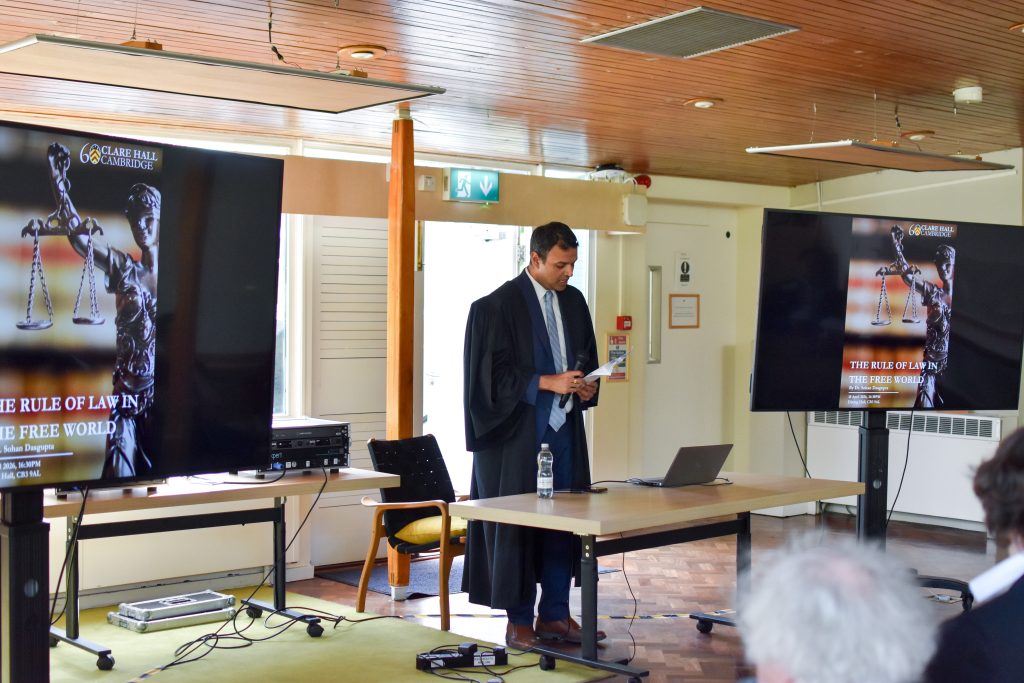
The final lecture of the day was delivered by Dr Sohan Dasgupta, former Assistant Secretary for Trade and Economic Security and former Political Head of the Millennium Challenge Corporation, U.S. Government. In his talk, “The Rule of Law in the Free World”, he offered a thoughtful examination of the condition of the rule of law across contemporary constitutional democracies. Drawing on Cambridge’s rich intellectual tradition, from Dicey and Hart to Lord Bingham, he situated present-day developments within a broader historical and jurisprudential context. Combining comparative evidence with philosophical insight, the lecture explored the evolving tensions between executive power, legislative oversight, judicial independence, civic trust, and technological change, offering a measured and compelling reflection on institutional resilience and the enduring importance of the rule of law in free societies.
Sunday 19 April
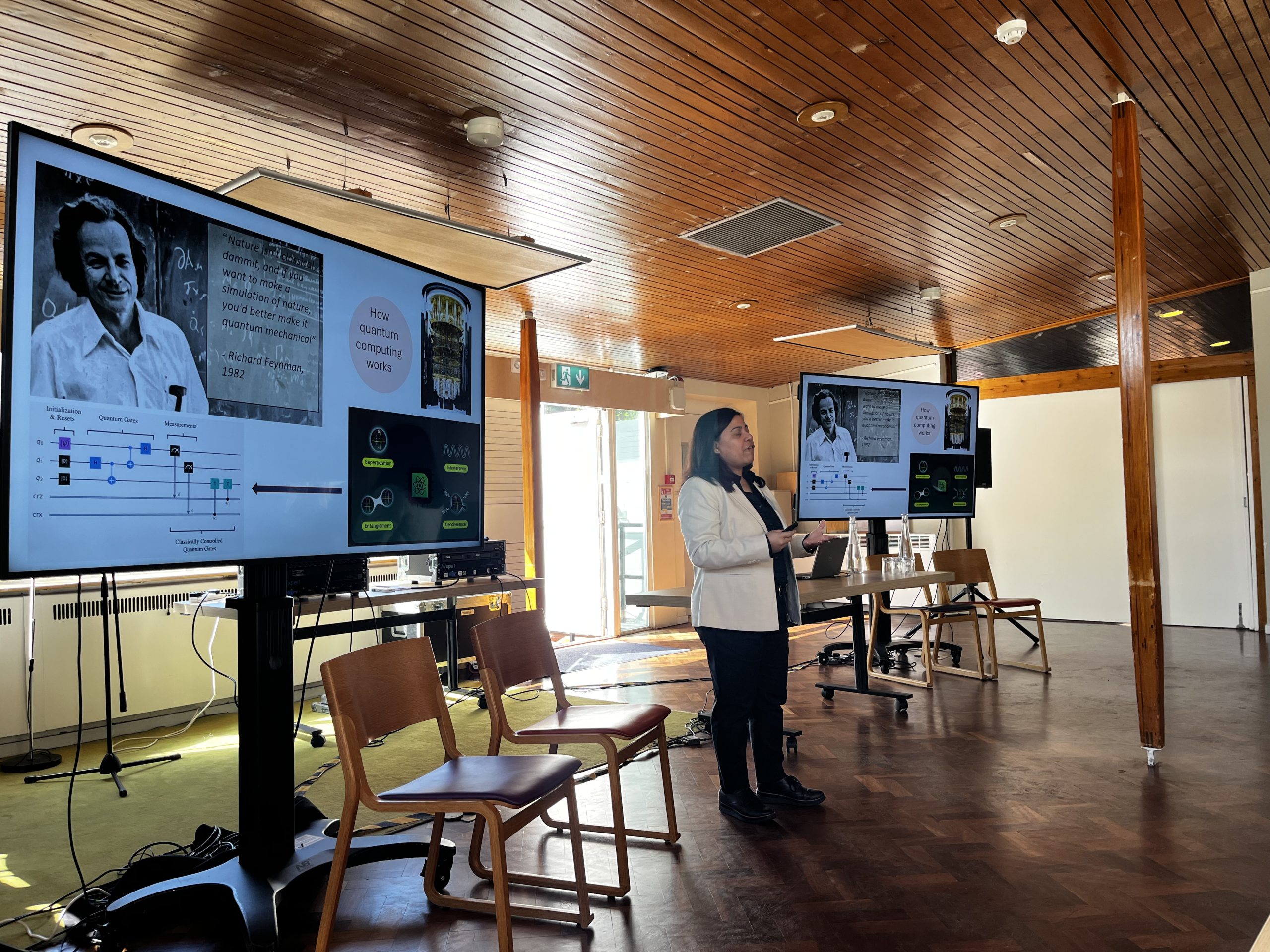
The celebrations concluded on Sunday morning with a lively Science Showcase and Networking Brunch at Clare Hall. The first session focused on “Big Science,” with presentations from Fellow Professor Ben Allanach and Life Member Dr Bipasha Chakraborty on the experimental and computational work behind particle discovery at CERN, alongside Oscar O’Hara, PhD student, who spoke on the development of the world’s largest telescope, the Square Kilometre Array. Joined by Senior Tutor Dr Holly Hedgeland, the session concluded with an engaging panel discussion, before attendees continued conversations over a networking brunch connected to the College’s newly established Industry and Enterprise Programme.
The second session, “Brain Science,” chaired by Fellow Dr Madeline Lancaster, turned to advances in neuroscience. Contributions from Research Fellows Dr Alex Anderson and Dr Ashling Giblin, as well as Affiliated Postdoctoral member Dr Christelle Langley, explored topics ranging from the role of mitochondria to the mechanisms of neurodegeneration and the potential for pre-clinical indicators to enable earlier, targeted interventions. A second lively panel discussion brought the morning to a close, rounding off a stimulating and collegial conclusion to the weekend’s programme.
The weekend drew to a close with a guided tour of the Clare Hall 60th Anniversary Art Exhibition and Sculpture Trail, led by Dr Fiona Blake, Secretary of the Art Committee, offering one final opportunity to reflect on the College’s rich artistic and intellectual life.
The past few days have been a wonderful reminder of what makes Clare Hall so distinctive, a place where ideas are shared generously and curiosity brings people together across disciplines and generations. We are deeply grateful to all the speakers who gave their time and insight, to those who organised such a rich programme, and to everyone who joined, contributed, and helped create such an engaging and enjoyable series of events. It was a joyful way to mark this special moment in the College’s history!